Finding a Way Into Sculpture: QEST Scholar Amanda Sumpter in conversation with QEST Youth Board member, Charlotte Holman
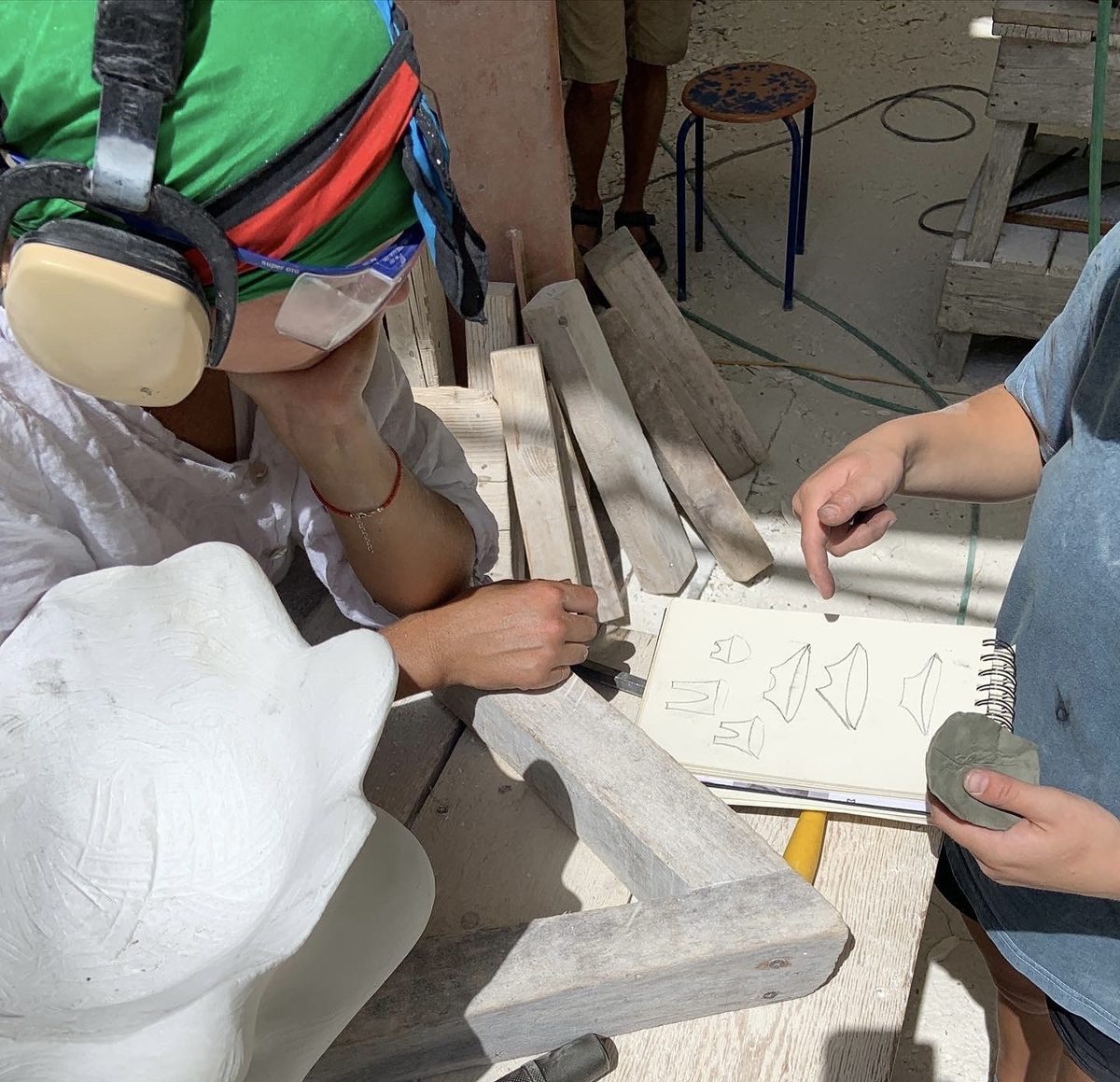
As she begins to explore her own sculptural practice alongside her training as a stonemason, QEST Youth Board member Charlotte Holman reflects on finding her way into the world of sculpture. In this interview, she speaks to QEST Scholar Amanda Sumpter about her unconventional journey into the profession, the importance of advice from fellow craftspeople, and how a creative practice can evolve over time.
‘After a few years of training as a stonemason, the world of craft is becoming more familiar to me, but when I first started out, it all felt completely foreign. Now, as I start to think about developing my own sculptural practice alongside stonemasonry, I’m finding myself once again navigating unfamiliar territory.
At school, I told my careers adviser that I wanted to become a ceramicist. She quickly responded by telling me that I couldn’t, and advised that I become a dental assistant instead — the link, apparently, being that dentists use ceramic teeth! I ignored her, of course, but bad advice like that meant I came to really value the advice of craftspeople who are actually making a living from their work. If, like me, you didn’t grow up in a creative family, talking to people who have found their own way into craft can be one of the best ways to understand the practicalities of turning something you love into a career.
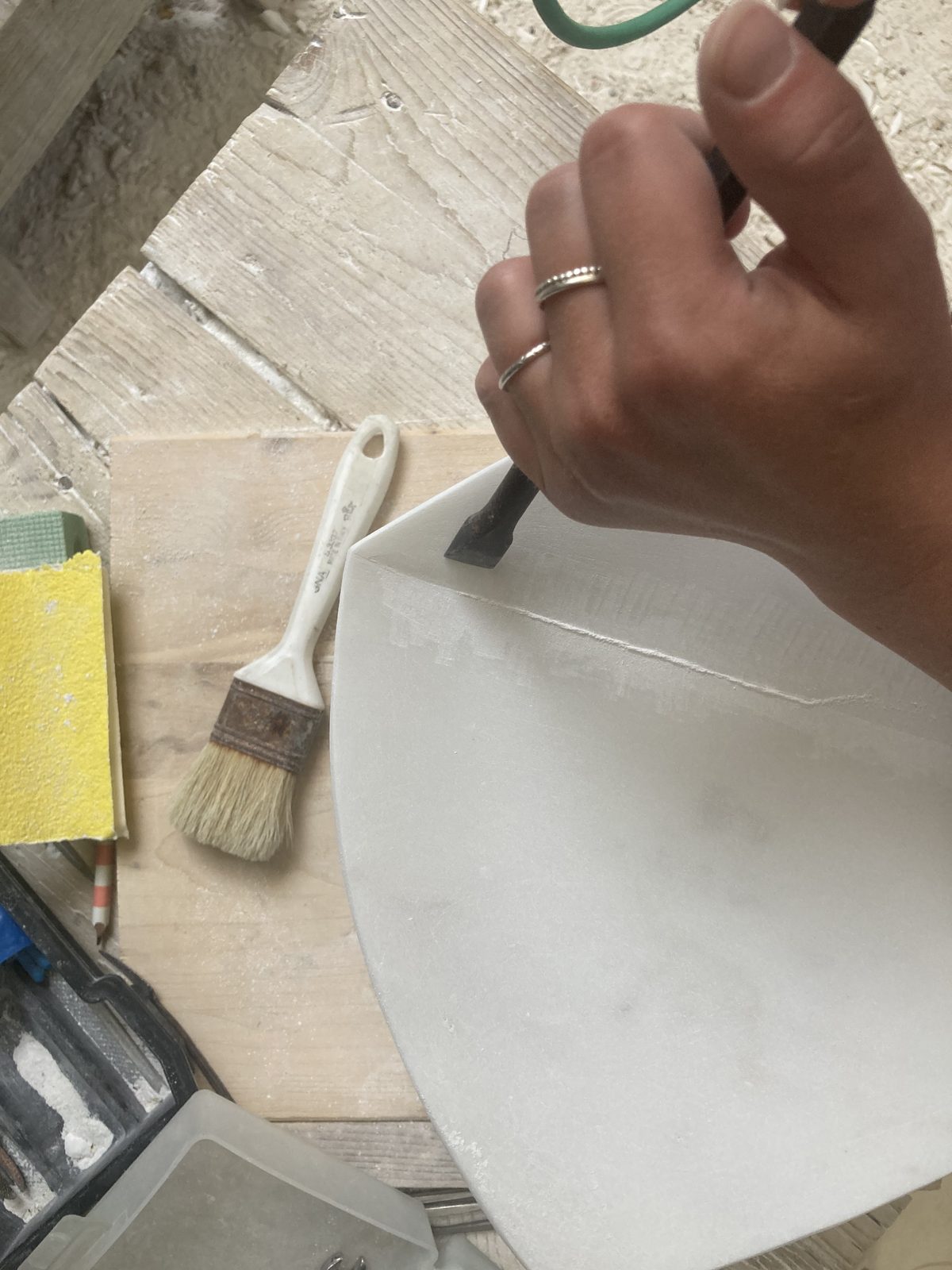
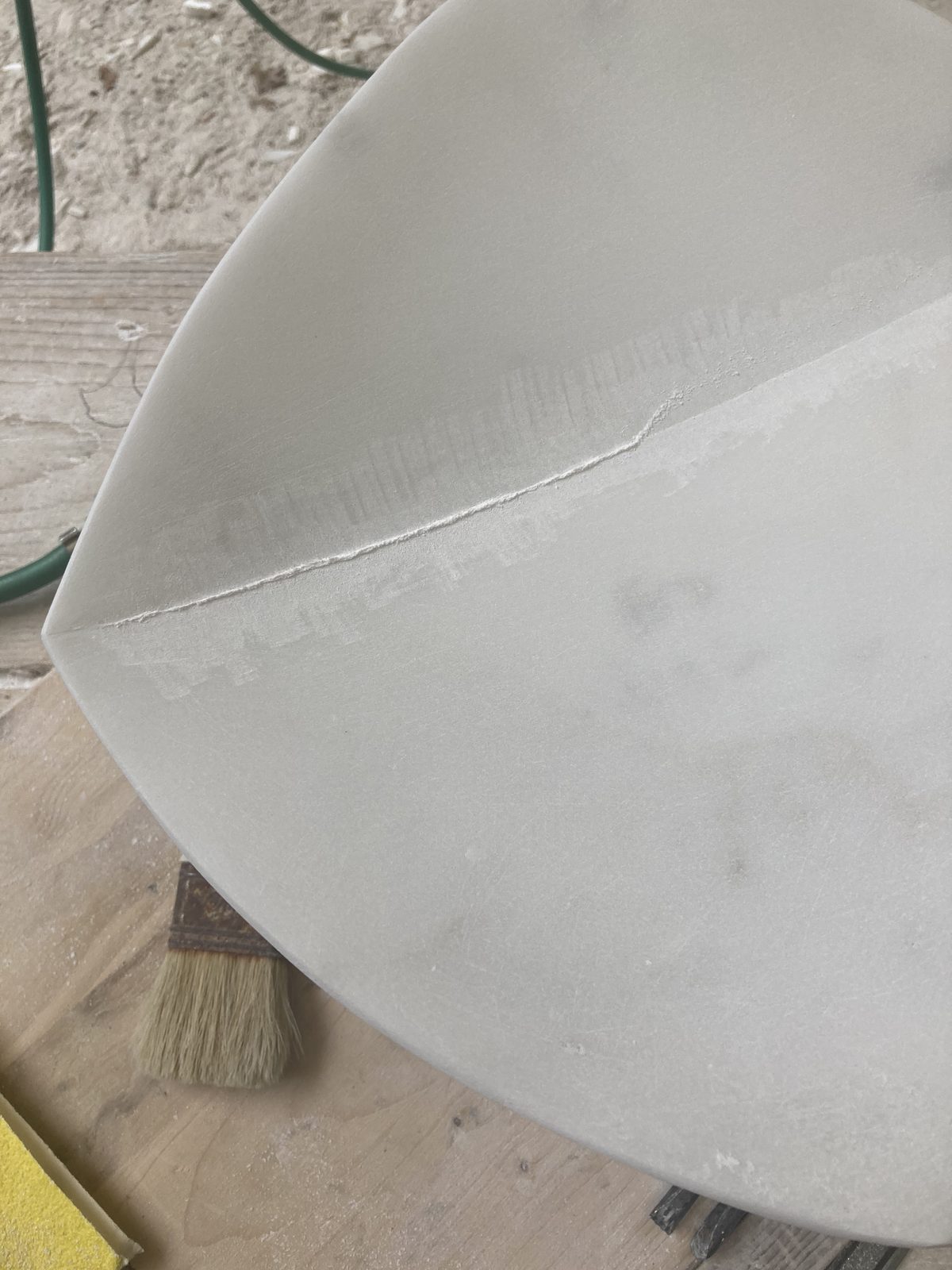
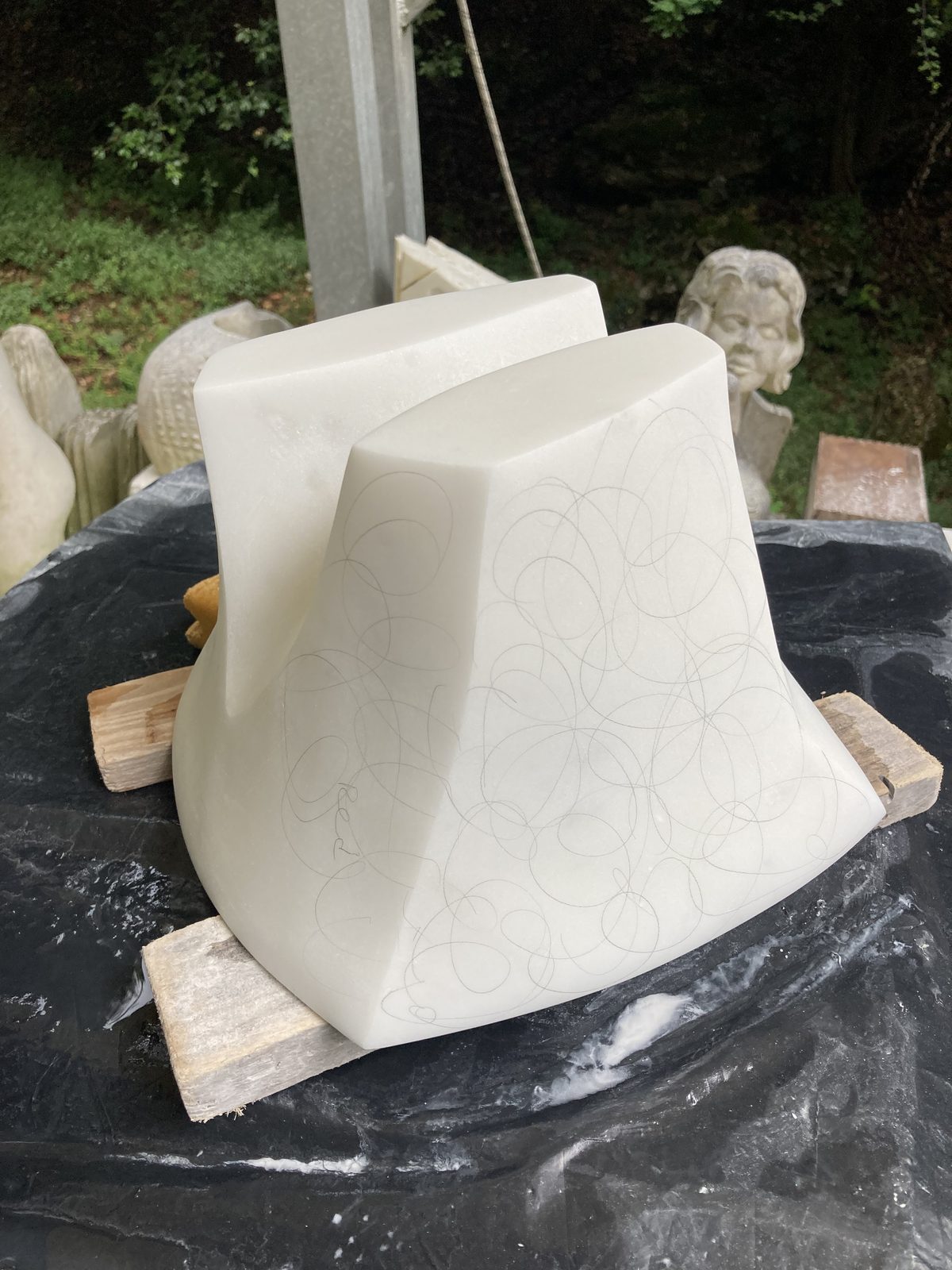
I wanted to speak with someone who has found their own way into sculpture which led me to Amanda, an artist and sculptor whose main medium is stone. Her works, comprising bulbous organic forms and flowing shapes, immediately inspired me so naturally, I got in touch to learn more about her journey to where she is today.
Amanda’s own route into sculpture was far from straightforward. She graduated from Chelsea College of Art in 1987 and initially worked as a painter before moving into installation and performance art. When she had her sons her responsibilities changed and she became a teacher.
“I never stopped making things… the lovely thing about being an artist is that the creative part doesn’t disappear.”
I found this particularly reassuring. It often seems as though everyone has landed directly into their dream job, but sometimes you have to do what works for you in the moment while keeping your creative practice going on the side. Amanda reminded me that nothing is ever wasted: “Everything you’ve done — your education, your work, your experiences — feed into where you eventually end up as both a person and an artist.” Amanda was introduced to stone carving in 2004, when she accompanied a friend on a weekend stone-carving course; “I absolutely loved it, and that was it — I was hooked.”
When I asked Amanda for some advice for someone starting out in craft, she returned to the idea that these careers rarely follow a straight line: “Doing something that develops skills which will eventually help your artistic practice is a brilliant way of doing it. These roads aren’t necessarily straight. You might take quite a circular route before getting back to where you want to be, but that’s part of the beauty of it.” And I really do agree with her there. Maybe you can’t afford to take that evening class, or you can’t commit to an apprenticeship because of other responsibilities. But there are often smaller things you can do to move yourself in that direction — keep a sketchbook, watch a YouTube tutorial, seek out work experience, or simply start talking to people who are already doing it.
With Amanda’s background as a painter, I was also keen to ask about exhibiting work and putting yourself out there as an emerging maker. I find this part of the industry completely foreign and, honestly, a bit daunting, so I appreciated her honest advice: “There isn’t really a magic bullet. You have to decide where you want to go and then put yourself out there. It would be lovely to sit at home making work and have someone walk through the door, see it, love it and buy it — but unfortunately that doesn’t happen very often!”
Amanda highlighted the importance of having a voice, consistently making good work and
engaging with the creative community: “That might mean social media, entering competitions, exhibitions, maintaining a website, or even opening your own studio so people can see your work.”
“Going to private views, exhibitions and events helps you meet people and become part of
the creative community.”
There’s also a huge amount of work behind the work itself: emails, shipping, administration, social media and websites and it’s easy to imagine that being a maker means spending most of your time making, but building a sustainable creative career involves a lot more than what happens in the studio. “The making is what everyone sees, but there’s an enormous amount underneath it.”
Of course, I also wanted to know what Amanda loves about working with stone. For something so physically demanding, stone carving can be surprisingly meditative: “Stone excites me because it’s not a passive material. You completely engage with it. You’re dusty, everything aches and you’re physically exhausted, but you can completely switch off. You’re putting your thoughts into a lump of stone.”
I can very much relate to this from my own experience of working with stone, and perhaps it’s one of the reasons I’m so drawn to exploring sculpture further. I think carving stone can be a challenging career, but when taking a chisel to a piece of stone evokes such a strong feeling, I think it has to be worth pursuing. Like with any craft, once you know, you know.
Talking to Amanda really reassured me that there isn’t necessarily a right time or a right way to become an artist. She is off to Italy soon to do a marble carving course funded by her QEST grant. Coincidentally, I have also done the same course, so I know how pivotal it could be within her practice. It also goes to show how different everyone’s path can be. Amanda has been largely self-taught and is now looking to expand her skills, whereas I felt I needed the boost and guidance of a teacher from the start, and am now beginning to put what I’ve learnt into practice.
Perhaps that’s the reassuring thing about finding your way into craft: you don’t have to follow someone else’s route. You just have to find the things that keep you wanting to create.’
Discover more careers in craft with our Craft Your Future page.