Jeweller Kayo Saito
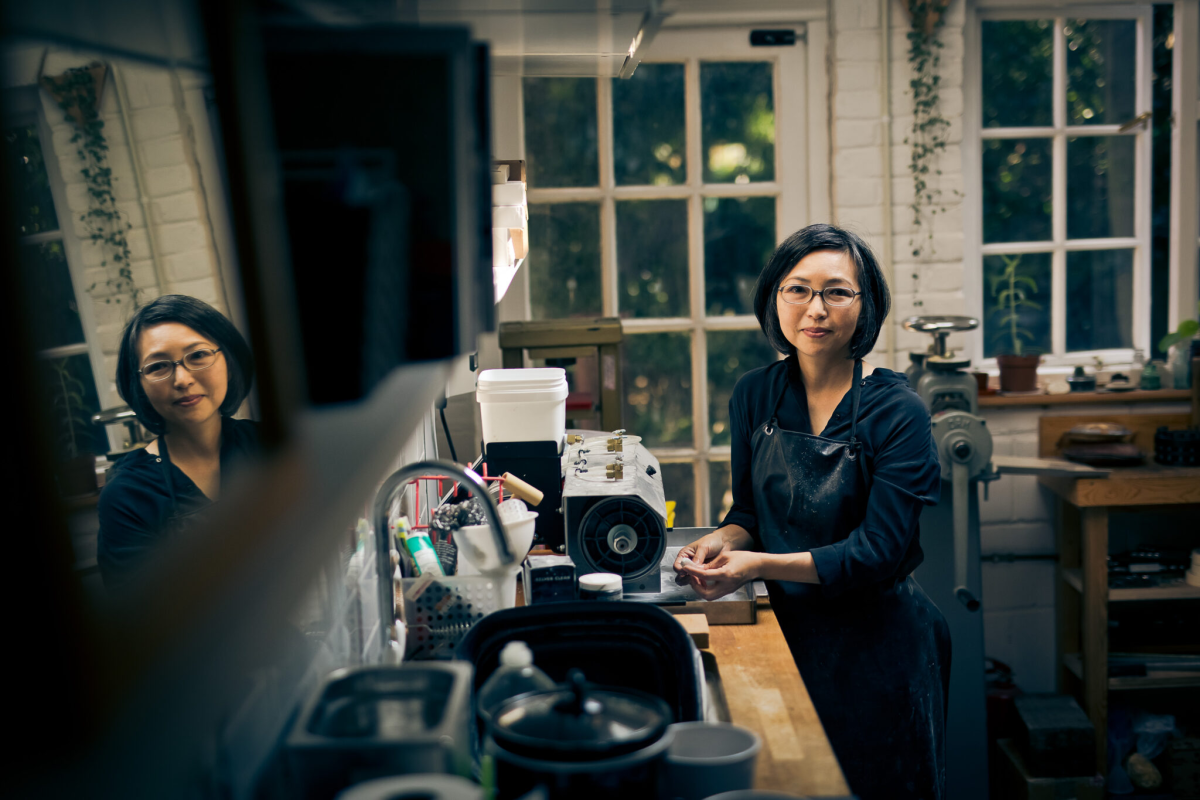
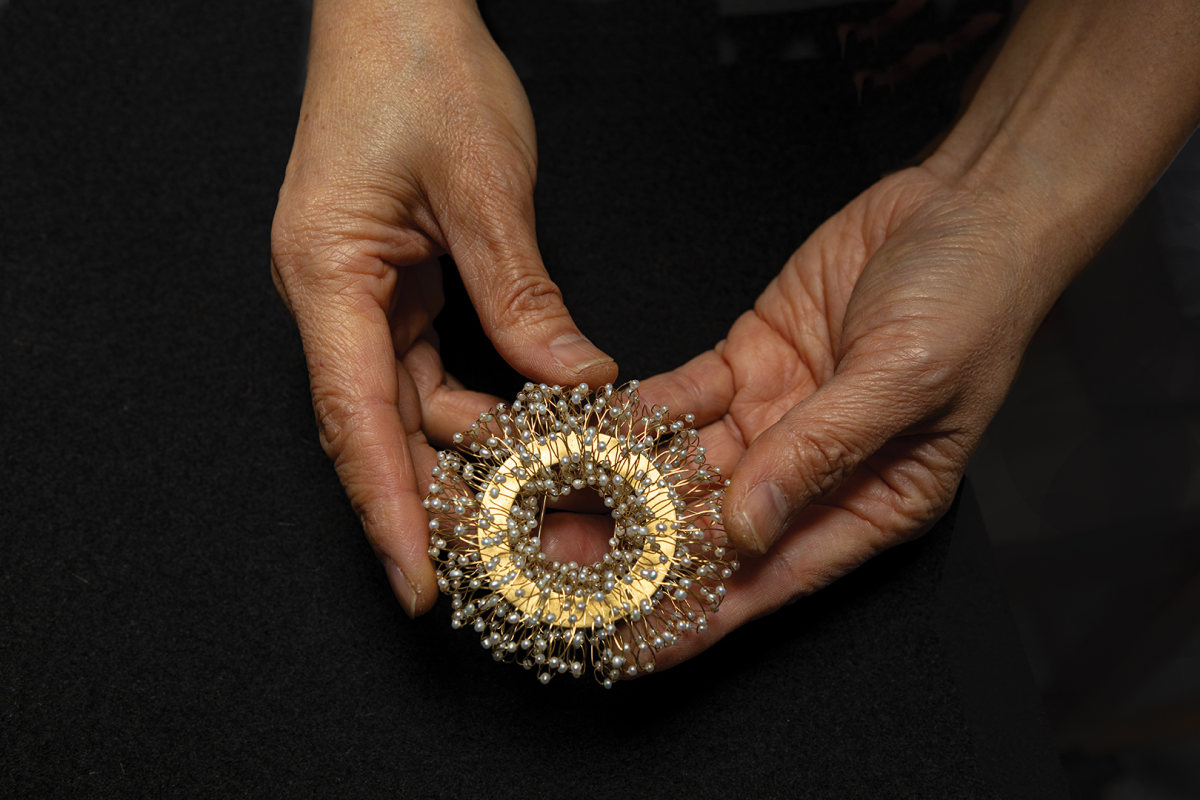
Award winning jeweller Kayo Saito works in precious metals and carved gemstones, she has trained in Japan and the UK to develop a highly skilled and creative approach to making wearable art.
“I think it was useful to get that broad skills base first; to be a good jeweller you do have to know how metal behaves. It’s also very important in Japan to use nature as inspiration for design, which is still important in my work now.”
Why did you decide to become a jeweller and work with precious metals?
Jewellery is actually my second career; I worked at a tableware company as a designer, but I wanted to start my own workshop and business. I thought about making jewellery because I liked the small scale of things, but strangely I didn’t really wear any jewellery. The good thing about jewellery is that it requires a relatively small space to start, but you need only a bench space.
I had studied metalwork in Japan where I developed my knowledge of the technical side of things, but I came to Britain to study contemporary applied art and contemporary jewellery – at that time, Japanese training wasn’t really looking at modern things.
You have trained in Japan and the UK; how does your work bring together these two different cultural backgrounds?
The two cultures are quite different because art in Japanese universities is very much about learning skills first before the design but here it’s more encouraged to find your own creative language at a very early stage and that was a very different way of studying for me. I think it was useful to get that broad skills base first; to be a good jeweller you do have to know how metal behaves. It’s also very important in Japan to use nature as inspiration for design, which is still important in my work now.
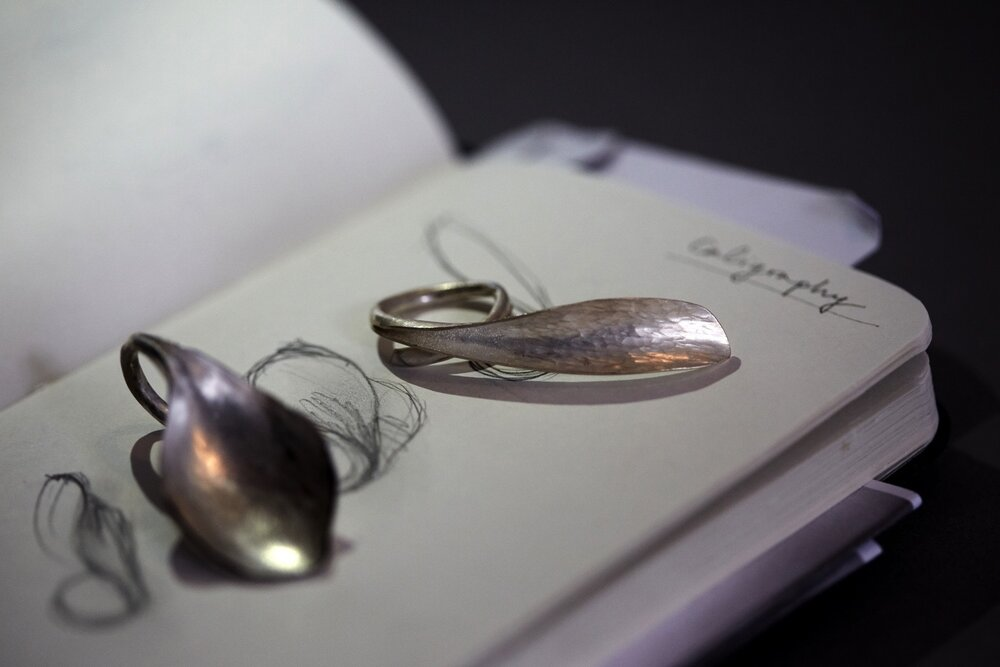
Can you tell us more about how natural forms inspire your work?
I think I’m naturally drawn to more organic shapes and I wanted to give metal a different character. Metal is very rigid, hard and cold – I wanted to break from that and make metal that is soft and light, and organic looking. I’m very attracted to the beauty of plants and natural forms. I might take pictures or make drawings to get influences from nature, but I don’t make exact copies of flowers. I try to extract the feeling from it. For example, sometimes when petals are first coming out, they can be very crinkly so I might use that kind of texture in my work.
As well as making the jewellery, what else do you have to do to make your business successful?
I am a one-person business so I have to do a bit of everything. Of course, when some people are more established (or work in different ways) they can outsource more of the support tasks. As well as making, I have to have sales skills, the ability to talk about my work, graphic and photographic skills, time management, social media skills, and accounting ability.
All of these things crop up day-to-day, so you have to think about all these things when starting a business. Most of these things you can learn bit by bit, I would say the most important after the craft skills are social skills, like talking to customers. In the end, you are working with people, so good communication, being able to understand what they want from you, and customer service are skills you have to use all the time. I also have to do quite a lot of travelling which can be a joy. For example, I often have exhibitions abroad, and I’ve just got back from buying materials at the biggest international rock and mineral fair in Arizona.
You’ve won lots of awards and have some of your work in important public collections, like the V&A Museum, what are you most proud of?
My career highlight to date is being acquired by the V&A, which was a brooch sold by QEST. Those museums and public collections are always a big achievement, but on daily basis I’m always honoured by individual customers that really love and use my pieces for their pleasure. I really enjoy seeing their happy faces when they buy directly from me. That keeps me going and is why I’m still doing it after 20-something years. Jewellery is a form that is very personal; it is worn very close to the body and often people pass it to the next generation or give it as a significant gift, so it’s a very special type of art.
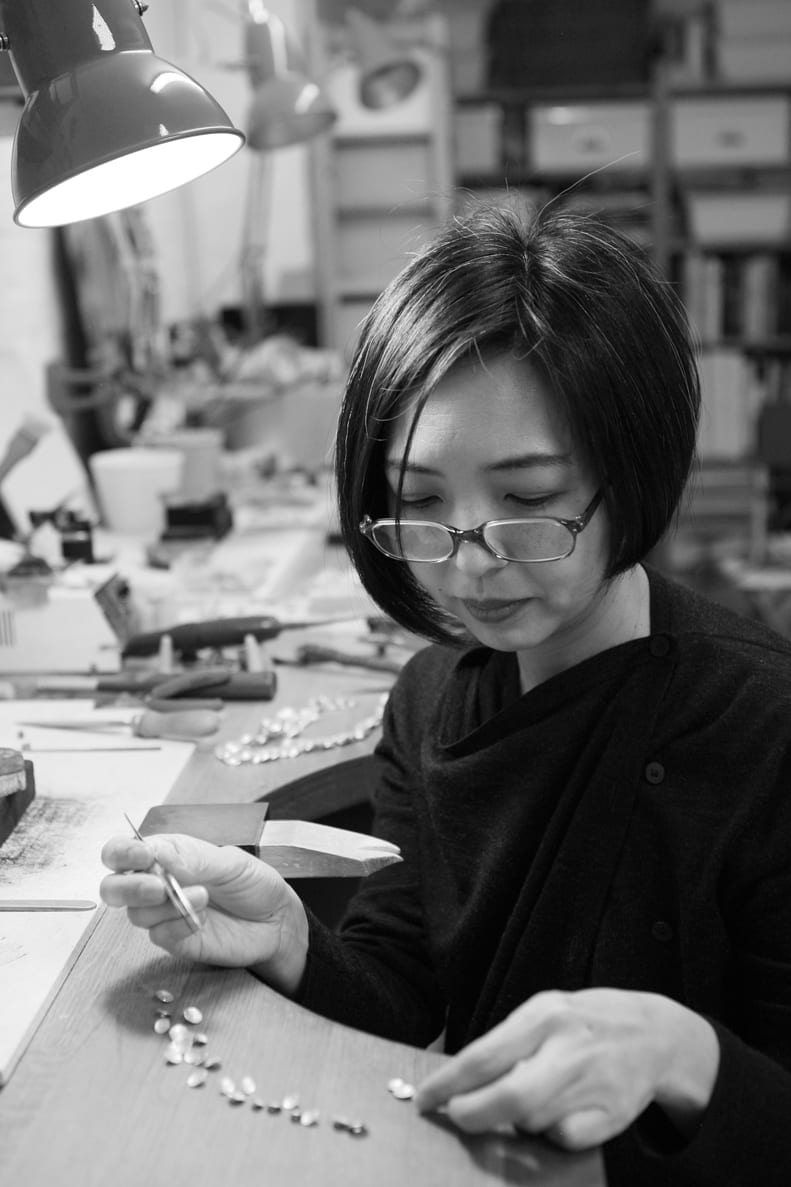
What advice would you give to someone who wants to work in craft in the future?
That’s a very interesting question because there are many different ways to succeed. I think the most important thing is to believe in what you’re doing and continue even when you hit obstacles. Only a very small number of people get very fantastic careers very quickly, but continuing is the key for me. It isn’t easy to keep creating work – it isn’t constant inspiration – and self-doubt can be your enemy, but if you keep going and developing your own creative voice you will go somewhere. I’d also say learning the basic skills is very important, so look at things like apprenticeships where you can train with others – you can develop your designs later. There are many ways of finding apprenticeships related to jewellery and silversmithing. The Goldsmiths’ Centre, Asprey and many more jewellery companies are often looking for young enthusiasts.
Find out more
The National Association of Jewellers provides resources and information about jewellery careers.
The Goldsmith Centre Skills Hub has career profiles as well as films and articles about the industry.
This interview was created as part of the Crafts in Fashion series for Making the Future — a campaign by QEST and Inspiring the Future (ran by Education and Employers). Read more about Making the Future here.