Plant Pigments with Kirsty MacDonald
In this What is… series, we asked a selection of makers to unpack one key term that’s central to their practice. We spoke to Emerging Maker Kirsty MacDonald to find out about plant pigments and how they’re used in craft.
Can you introduce yourself and your craft practice?
My name is Kirsty MacDonald, and I am an artist currently studying an MA at Gray’s School of Art, Aberdeen, with a deep interest in Scottish culture and plants. I explore these topics through my practice, which revolves around the use of sustainably harvested plants, creating pigments, inks, paints, paper and tools from them. I then use these crafted items to create more artwork with an aim to communicate the importance of our natural environment and culture.
Today, I will be talking about “What are plant pigments?”
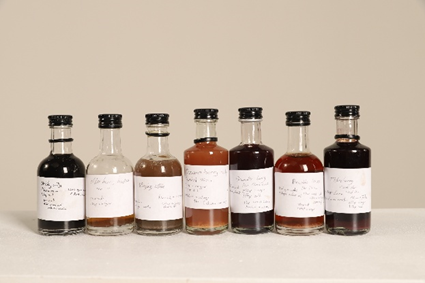
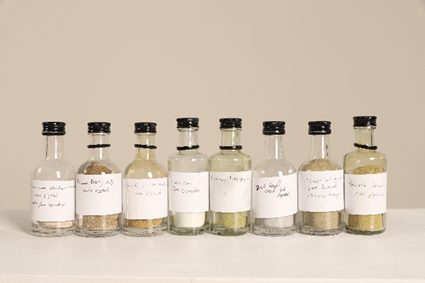
Plant pigments are natural colour substances which have been extracted from plants via a process similar to cooking. I gather together a handful of plant material, for example, oak galls (harvested from oak trees) and then simmer them in a pot together with other ingredients which extract the pigment from the plant material. This pigment comes in a liquid form and can be used as an ink, dye or paint. You can then turn this pigment into dry pigment using another process, which creates a what is then called a “lake pigment”.
What is the history behind this craft?
Historically, plant pigments have been used worldwide with all sorts of colours being created, including bright blues, yellows and reds. In Scotland, plant pigments have historically been used to dye tartan, including the use of native plants such as various lichens and clubmosses, dock leaves, oak, elderberry, blaeberry, birch and more. In later years, dye plants such as weld, madder and woad began to be imported to the UK and were grown across the country, expanding the pigment spectrum of the UK. Plant pigments were often used in medieval manuscripts in the UK, and dye gardens existed across the country, with some areas also farming particular pigments for more commercial usage. Over time, the practice of natural dyes, inks, and paints from plants decreased due to the increase in synthetic dyes, which were invented in the mid-19th century and the rise of the industrial revolution and global trade, natural plant dyes fell into disuse with only a few people who continued the practice in the country.
How is it used in craft, and what makes it important?
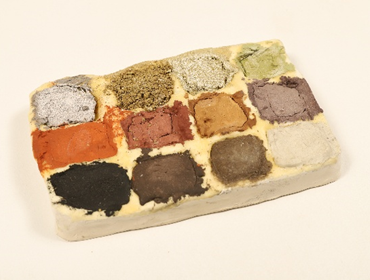
Plant pigments have a versatile role and can be used to make inks, dyes and paints, with each process being quite similar. By creating your own pigments you can use them to create drawings and paintings, or you can use them to dye various fabrics. In some cases, they can be used to dye other materials, such as bone.
Plant crafts are important for many reasons: Historically, plant dyes have been integral to the UK’s culture for centuries, with deep roots in Scotland and Wales, where traditional practices flourished. Today, they offer a sustainable alternative for artists to create their own materials — harvesting plants responsibly and reducing reliance on large-scale monocultures for pigment production. Perhaps most importantly, the art of using plant pigments represents a fading craft. As knowledge diminishes, we risk losing the array of colours that the natural world provides. By reviving and celebrating this craft, we can ensure its survival for future generations.
Can you share an example of one of your projects that use it?
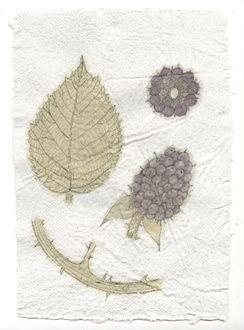
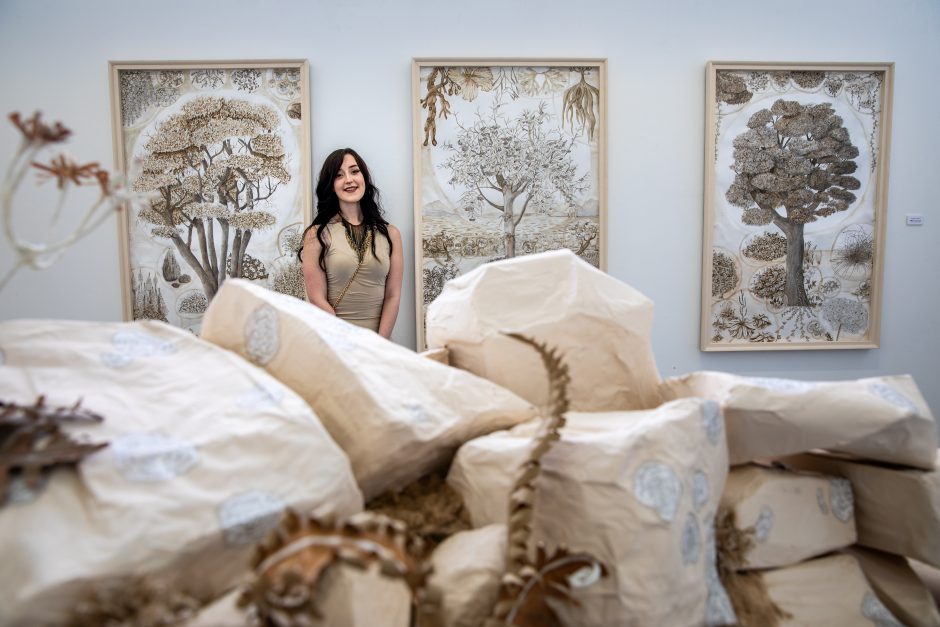
Definitely! Within my own practice, I am currently working on showing the pigments as artwork in and of themselves, displaying the work that goes into the craft and showing them within fine art contexts, but alongside this I have been working on various paintings such as this series of paintings on hand-made paper (see images) where I take inspiration from old botanical illustrations and draw the plants that I have extracted pigments from and then paint them with the pigment of that plant.
Further to this, I am also working on a series of stencils, wallpaper designs and more that use plant pigments as colour, which will be resolved later this year. I am hoping to continue to experiment and conduct my own research into native plants and the dyes that they yield with hopes of expanding my pigment spectrum and the research available on native plant pigments. I am still in the early stages of exploration and usage of plant pigments in my work, but with help from the QEST scholarship, I have improved quickly and learned a lot more about the craft.
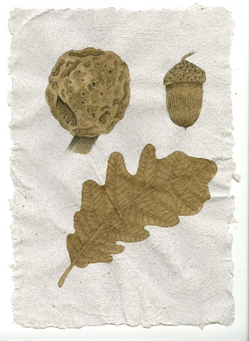
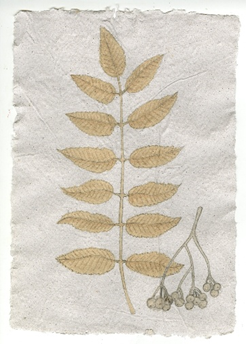
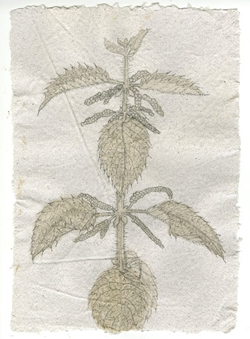
4 artworks from a series of 10 – handmade paper with natural pigments.
Find out more
Here are a few resources to learn more about plant pigments and natural/ sustainable crafts:
The website Plants and Colour has an array of workshops, talks and events that teach people about natural paints, dyes, pigments and inks.
My training, which has been made possible with the QEST Radcliffe Trust Emerging Maker Award gave me the opportunity to work with the wonderful artist Lucy Lee from Old Mill Arts, an organisation that also gives workshops, talks and mentorships on plant pigments, dyes, tools and more.
Other sources that could be useful include:
- Nick Neddo’s book “The Organic Artist”
- Caroline Ross’s book “Found and Ground”
- And Jenny Dean’s “Wild Colour”