QEST Youth Board Chats: Meet Youth Board Member Muska Kakar
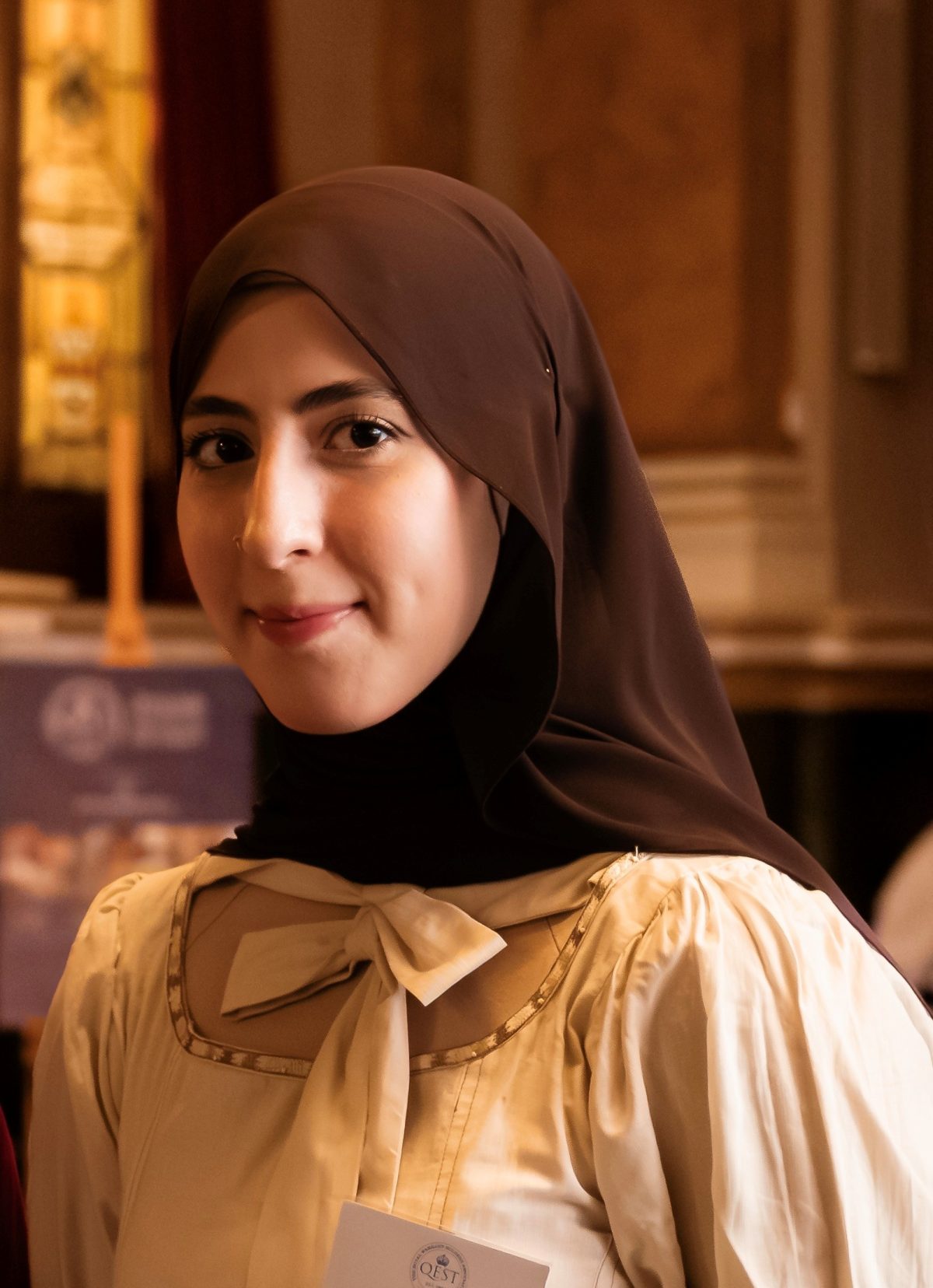
In this Meet the Maker article we spoke with QEST Youth Board member Muska Kakar about her hand embroidery studies at Royal School of Needlework, the project she’s most proud of and what advice she has for people interested in her craft.
Can you introduce yourself and your craft practice?
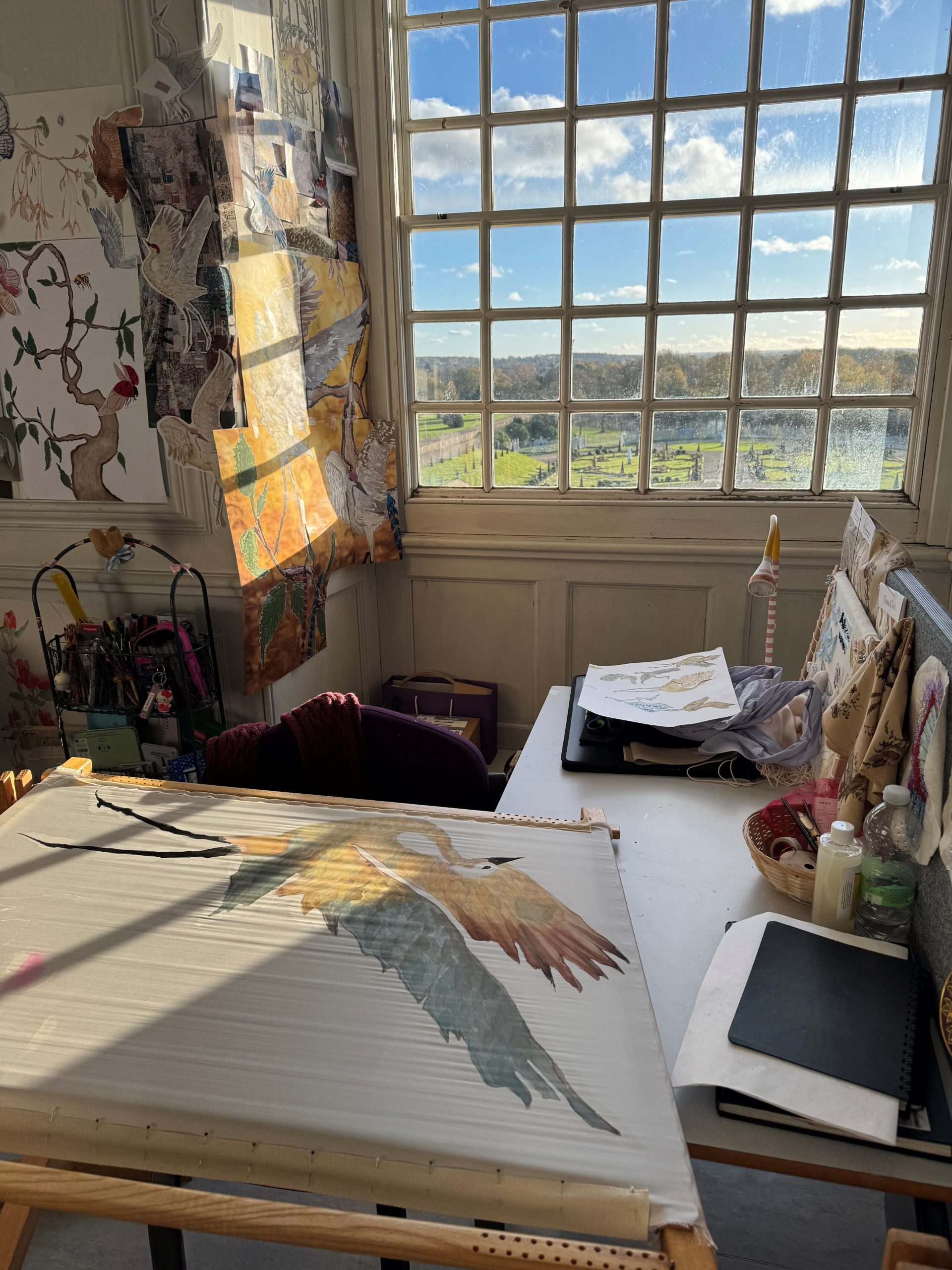
My name is Muska, and I am a hand embroidery student on the degree programme at the Royal School of Needlework. My love for embroidery and textiles began when I was around four years old, when my mother would give me fabric and plastic needles so I could try simple cross stitch. I spent hours playing with different materials, beads, coins, recycled fabrics, and anything else I could get my hands on.
I grew up surrounded by creative women. My mother and grandmother were both dressmakers and embroiderers, and being around them had a huge influence on me. Seeing their skills and creativity up close was incredibly inspiring, and it naturally shaped my own interest in the craft.
Having them as my first teachers and role models played a big part in my decision to pursue a degree in embroidery at the Royal School of Needlework, where I’ve been able to develop those early experiences into a deeper practice.
Can you share a project or piece you’re especially proud of?
In my second year at the Royal School of Needlework, I worked on a live project with the Embroidery and Design team at Alexander McQueen. My theme, Divine Femininity, explores ideas of femininity within my Afghan heritage, reinterpreting them through a contemporary fashion lens for the streets of London.
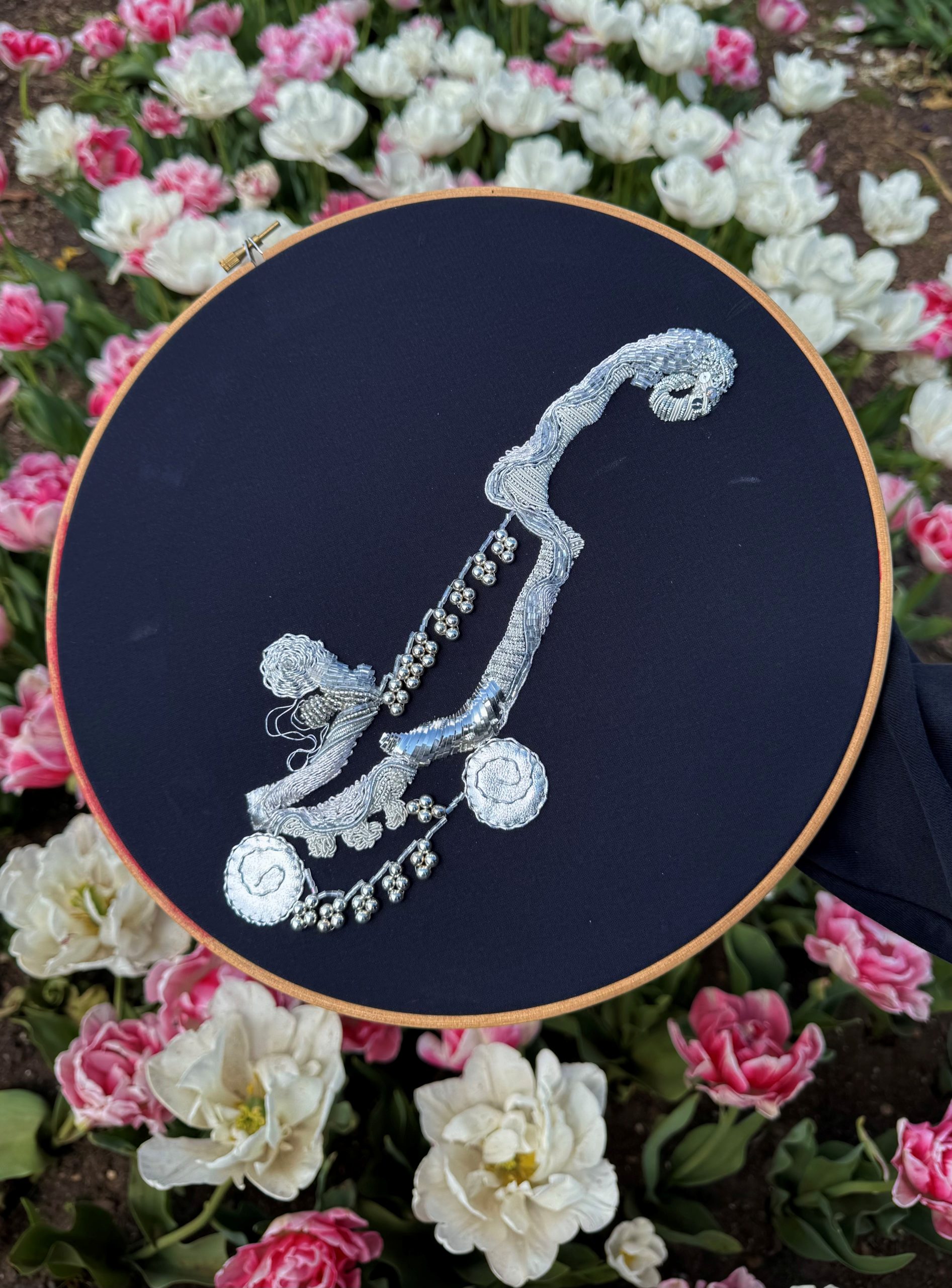
One of my favourite pieces from this project was an embroidered antler inspired by a deer, designed for the back of a suit. I created it using goldwork techniques and beading to build richness and texture since it was all silver. I combined different ideas I had been exploring, especially the relationship between deer imagery and traditional jewellery.
I liked the idea of the deer almost “wearing” jewellery, it felt playful but also meaningful, turning natural forms into something adorned and expressive, and bringing the whole concept of Divine Femininity to life in a contemporary way.
The concept grew from symbolic imagery that felt personal to me: deer to represent grace and gentleness, pomegranates to symbolise life, abundance and fertility, and lilies to reflect purity and renewal. I also drew on traditional Afghan jewellery, especially its intricate detail and ornamental quality.
I grew up surrounded by creative women. My mother and grandmother were both dressmakers and embroiderers, and being around them had a huge influence on me.
What’s one tool or material you can’t live without, and why?
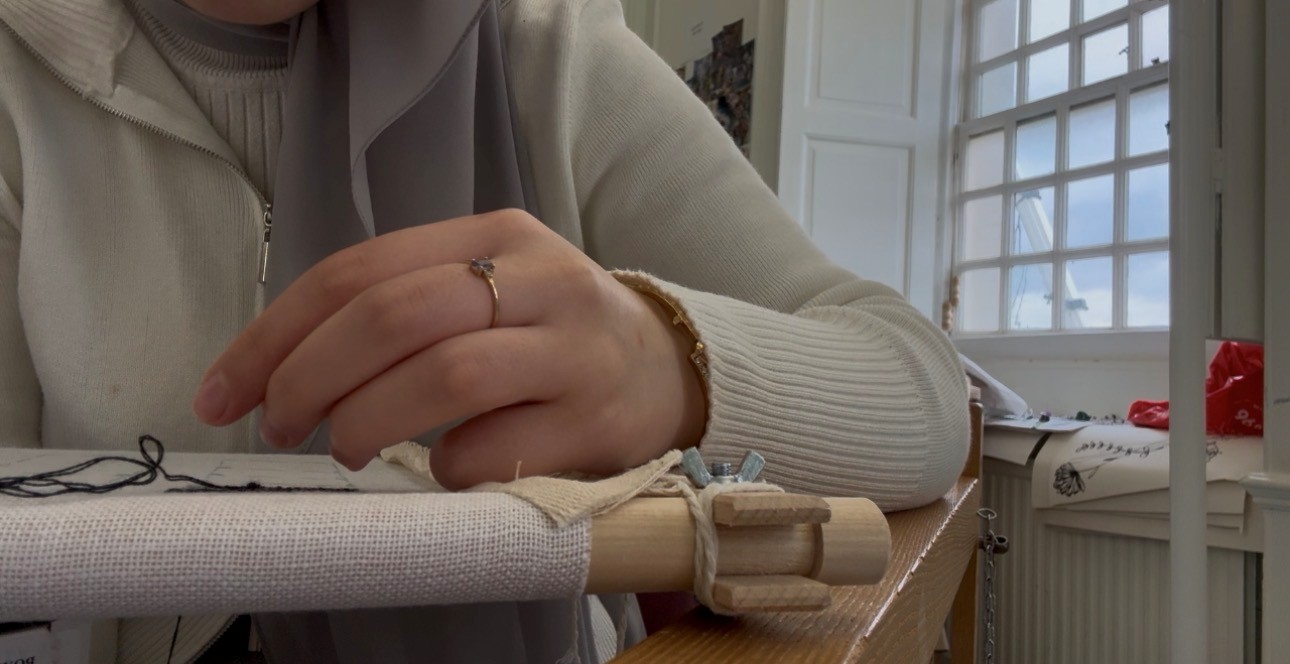
Aside from the obvious essentials like needles, thread, and scissors, I would definitely say a mellor. It’s an embroidery tool used in goldwork, mainly for gently pushing and positioning metal threads into place as you stitch.
I use it constantly in my practice because it helps me achieve accuracy and control, especially when working with more intricate or delicate goldwork materials that easily tarnish and bend. It becomes almost an extension of my hand, allowing me to refine details accurately, so it’s definitely one of my most important tools!
Where can young people see more of your work or learn from you?
You can find me on Instagram @Musuhaa.stitchfairy. Here You’ll find my work, cool things I get up to and the work in progress of pieces from time to time too!
What advice would you give to a young person interested in your craft?
I’d honestly say just go for it! The creative world is huge, and there’s so much room for everyone to find their own niche and grow within it. With embroidery especially, there are endless techniques, materials, and styles to explore, and the only real way to find what resonates with you is to try things out, experiment, and not be afraid of making mistakes along the way.
It can feel like a lot at the beginning, but that’s completely normal. Everyone starts somewhere, and over time things naturally become more controlled and refined. The more you focus on developing your own practice and voice, the more your direction starts to take shape.
Finally, remember that you’ve got this!