Studying, Stitching, and Museums — Martha Strachan Talks Textile Conservation
We spoke to Martha Strachan about her journey from studying textiles to discovering a passion for conservation during a museum placement — a path that’s led her to a master’s in textile conservation.
Can you introduce yourself and your craft practice?
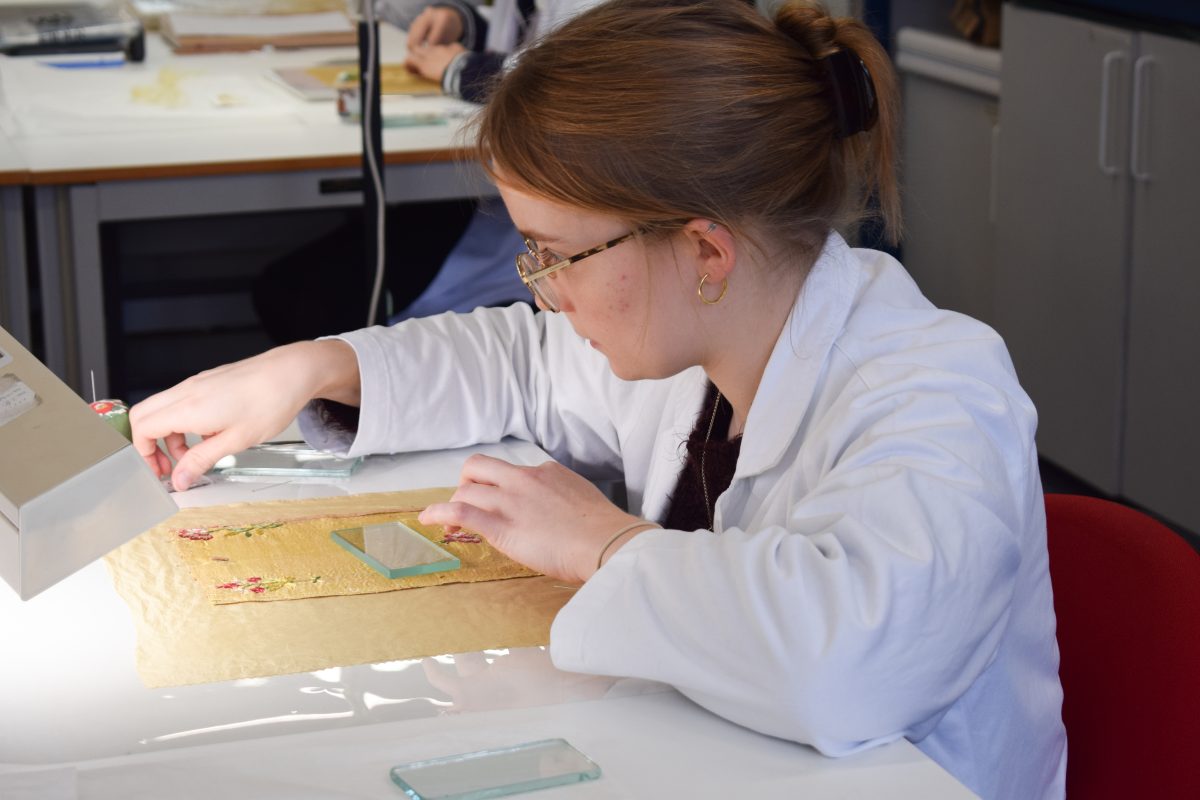
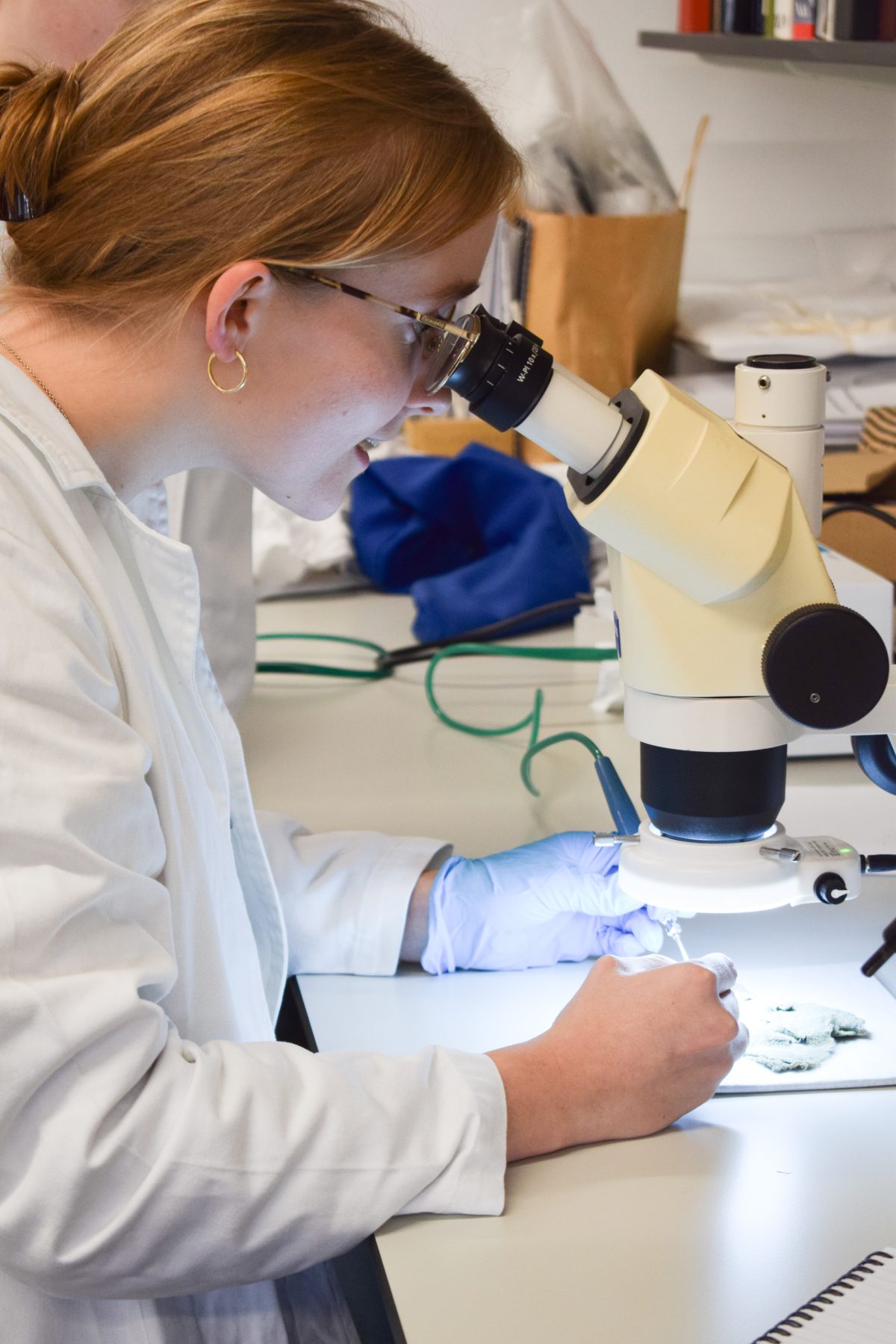
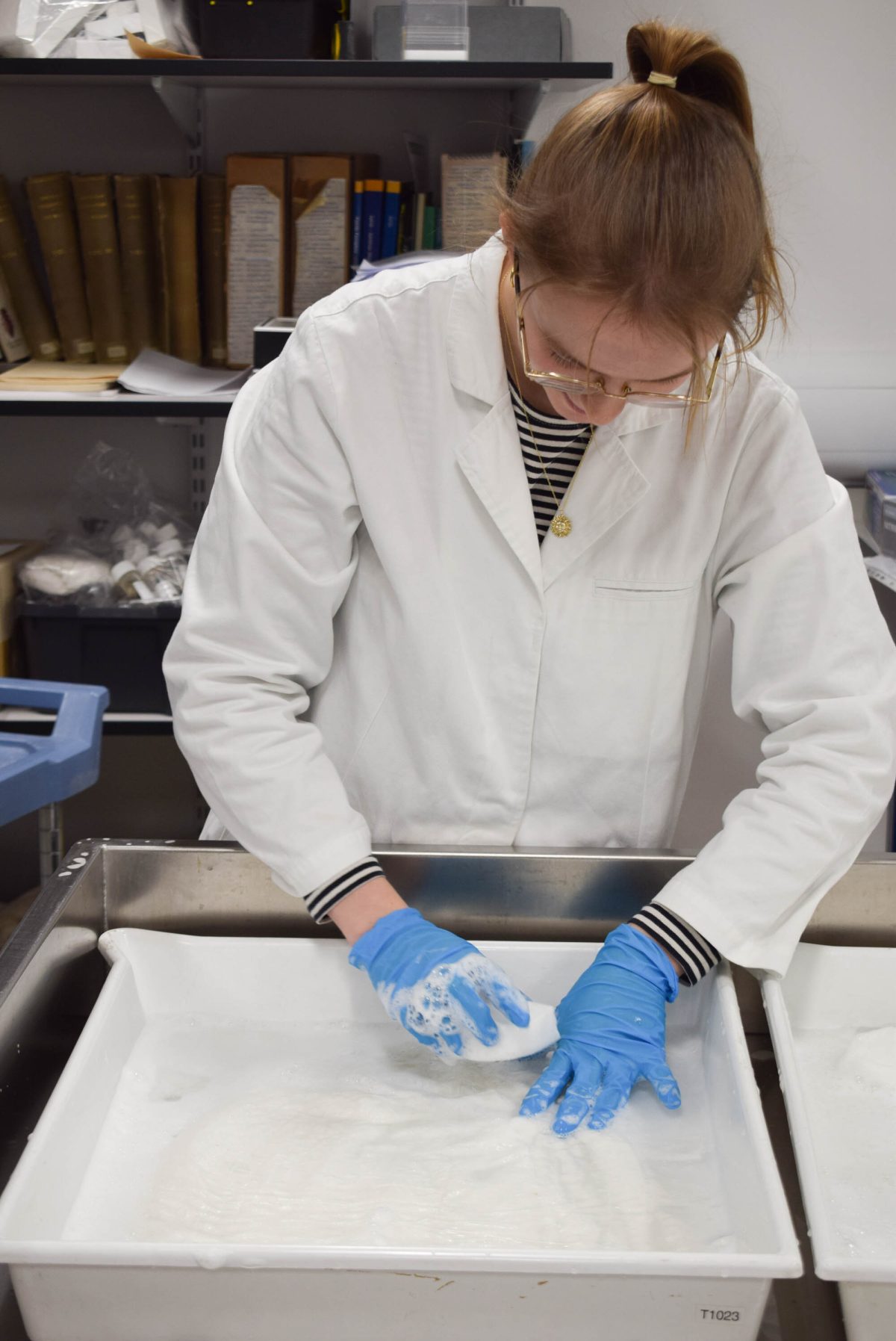
Hello, I’m Martha. In 2024, I had the honour of being awarded the Emerging Makers grant [from QEST], which has played a crucial role in supporting my tuition fees for my master’s program in Textile Conservation (MPhil) at The University of Glasgow. Textile conservation is fascinating. However, it is often overlooked in the craft world, as is the craft behind other crafts. It preserves delicate textile artefacts through specialised treatment that includes meticulous stitching and cleaning. My experience in this course has revealed just how demanding and skilled this profession truly is!
The profession of textile conservation is a captivating blend of science, ethics, and history; however crucially, it would not be possible without great technical skill.
Whether it’s surface cleaning or humidification, or stitch supports and wet cleaning, each practice demands intense focus, a robust contextual understanding, and a meticulous attention to detail. With every new insight I gain into this fascinating craft, my passion for it grows stronger, all of which would not be possible without the invaluable support of QEST.
Can you tell us about some of the key steps in your journey?
While studying textiles at Loughborough University, I truly honed my keen eye for detail and meticulous sewing skills, specialising in hand embellishment. However, it was not until after university that I discovered the field of textile conservation. After university, I was fortunate enough to complete a seven-month placement at my local museum, Worthing Museum, which boasts an incredible 30,000-piece costume collection. There, I learnt about the intricacies involved in caring for historical textiles and garments, including packing and display mounting. It was my time at Worthing that opened my eyes to the museum world as a career; although I had always loved museums, I had never truly appreciated what happened behind the scenes until this point.
From there, I worked at the British Museum, primarily improving storage solutions for their extensive world textile collection, and then at the Victoria and Albert Museum as a technician. There, I created bespoke display mounts, packed crates, and installed exhibitions. These roles were fascinating; every day, I saw the care and effort put into the storage and display of artefacts. I felt so inspired by, however, textile conservation being such a specialised profession, a master’s degree was the only way I could progress as a conservator and perform specialised treatments on objects.
I am extremely grateful to be studying a specialisation that I love. With the experience I have gained in my previous roles, I understand how conservation functions in the museum industry. After my master’s, I hope to return to the profession equipped with my new skill set and contribute to preserving history for the future.
What challenges did you face along the way, and how did you navigate them?
The main challenge I faced was financial strain. The course is expensive, and for two years, it was difficult to earn money due to the demanding lesson schedule and workload. While I saved as much as I could before the course, I could not have afforded it without the support of charities such as the Queen Elizabeth Scholarship Trust.
What advice would you give to someone considering a similar path?
Firstly, I encourage young people thinking about a career in conservation to visit museums! It may seem like a simple task; however, it is truly the only place to be immersed in history and witness conservation treatment first-hand. When you look at a display, consider the work that goes on behind it; the curation, conservation, and installation require thorough planning and effort that often blends into the background. For example, a Victorian dress on display always has a system of bespoke undergarments designed to support its undulating shape.
From there, get involved. Find a volunteering opportunity at your local museum; they always have a long list of tasks just waiting for a passionate person to take on! By doing so, not only will you gain experience, but you will also help preserve and document your local history. Gaining experience in the profession helps you clearly understand the specific training you need. For example, in my three years, I was drawn to textile conservation, but it may be that dress history or a museum studies master’s program suits you better.
What’s more, reach out to conservators. We are a friendly and passionate bunch, always willing to help one another!
If a master’s is what you decide to pursue, do not be intimidated by its cost! There are many fantastic funding opportunities, and while it is indeed hard work to find the various funding options, they are available, with QEST being one of the most generous and supportive of all.